
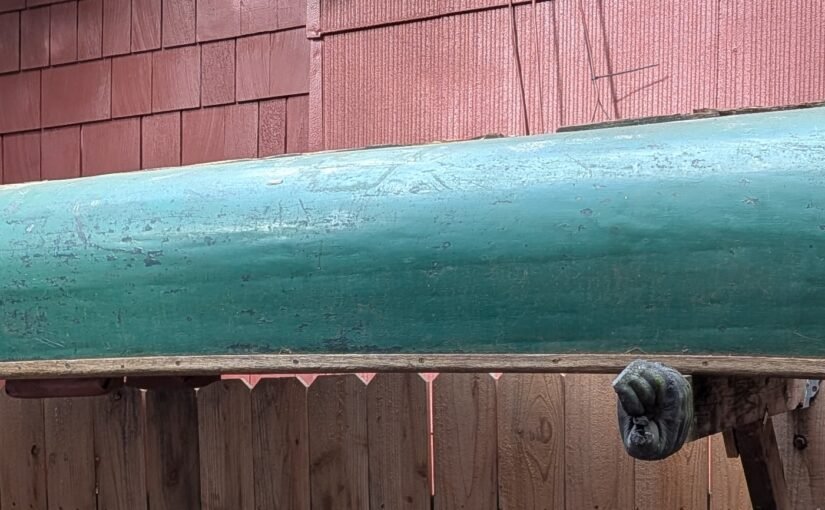
I gave away a canoe.
A 1963 Seliga wood and canvas canoe.
If you know about Seligas, then you know to be in disbelief. If you don’t know canoes, this boat is an heirloom, a piece of history from the Boundary Waters in Northern Minnesota. It is a thing of beauty lusted after by paddlers. It was hand-made by Joe Seliga.
When Joe built this canoe, there were two well-known manufacturers: Old Town, and Joe Seliga. Old Town canoes were to die for. Boats made by Joe Seliga (Seligas) were rare, sought-after, and a status symbol – more prestigious than even Old Towns. Grumman aluminum canoes were for everyone else.
As a wilderness guide in the Boundary Waters, I would meet other canoe paddlers. If the other paddler was in a Seliga, I would genuflect and express admiration. If it was me in the Seliga, I would graciously accept the praise in keeping with my elevated status.
I owned a Seliga. And I gave it away.
Seliga As Art
This Seliga has serial number 6634255. Decoded, that number means it was manufactured by Joe Seliga in June of 1963. It has two pointy ends (instead of a flat stern for mounting a motor). It was the 255th boat Joe made; he only made 621 in his lifetime.
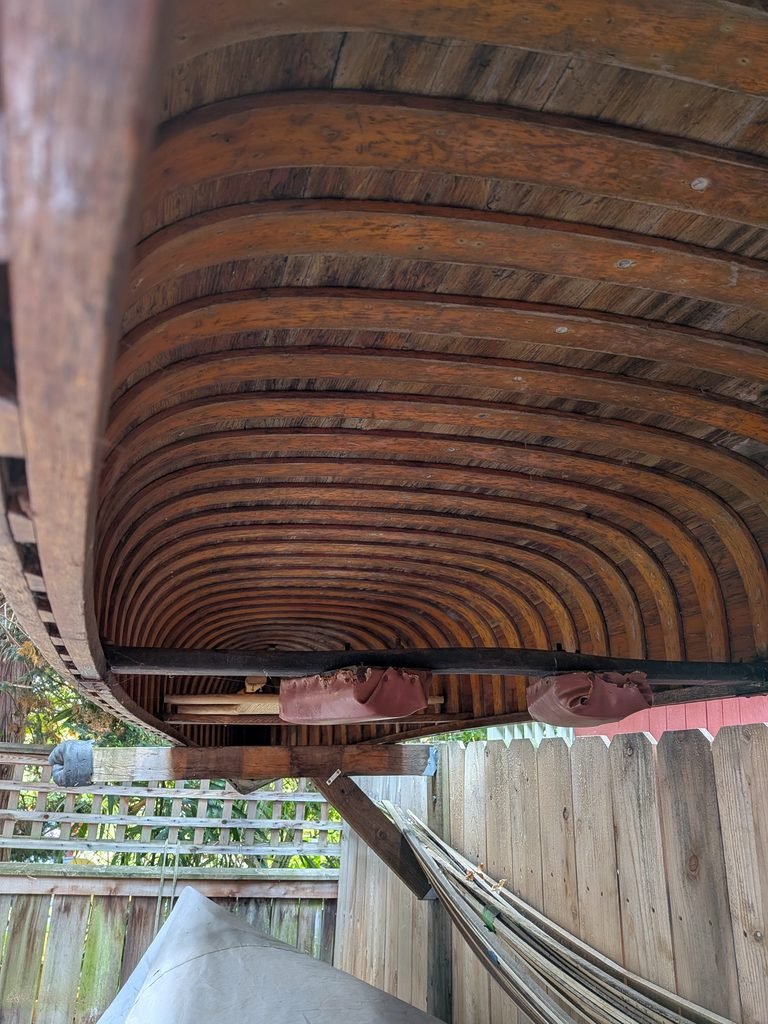
Canoe construction and materials have come a long way since Joe built his first boat in 1938. At that time, fiberglass was a lab experiment and not generally available. Instead, he built canoes with bent-wood ribs, covered by cedar planks which were covered by canvas, which was treated with primer and paint to produce a water proof covering. They were heavy; sixty pounds at the beginning of a season, seventy or more after a summer soaking up lake water. As a guide carrying one of these boats, I thought of it as a daily gym workout. By the end of the summer, anyone carrying one of these boats was pretty buffed up. Plus, we ran around in shorts and no shirt. I would guess we made more than one young heart go pitter-pat.
When I was twenty-some years old, I could portage a Seliga (or an Old Town wood and canvas) up to a third of a mile. They are well-balanced but require deeply padded yokes (again, sixty pounds). Once you get the canoe on your shoulders, walking and balancing is easy. Notice I did this when I was forty years younger; I have been advised not to do that sort of thing anymore.
Hitting a submerged rock will damage the canvas and paint skin, so we did our best to protect them at portages (where you carry the canoe across land) and campsites. As a camper in the Boundary Waters, I learned that only three things touch the skin of a wood-and-canvas canoe: water, air, and bread dough. (We made bread dough and the canoe provided a dirt-free, smooth surface for kneading.)
For all the fragility of the canvas, the ribs and planking were willing to fight back against collisions. Some boats came back from trail with cracked ribs, but not without adjoining stories of class III and IV whitewater, or falls from cliffs. I shot numerous whitewater runs with a fully-loaded canoe (600 pounds of people and gear); never did I crack a rib (either in myself, or on the boat).
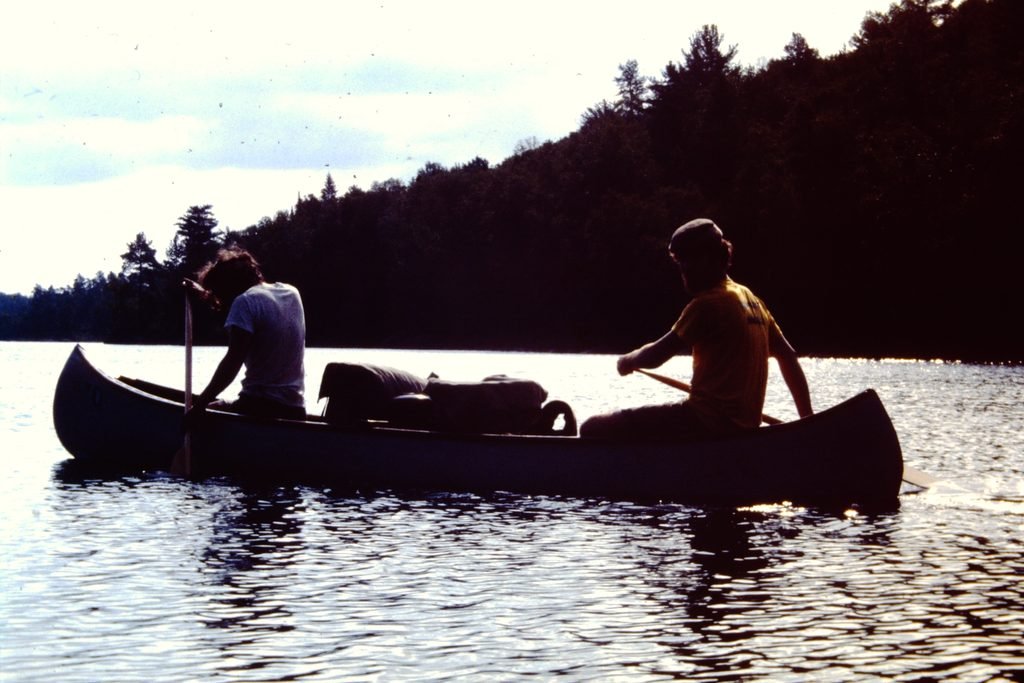
Paddling a wood and canvas canoe is a dream. Picture yourself in a canoe on a quiet lake; a loon calls in the distance, smoke rises in the early morning. You want to be sitting in a Seliga. The boat is quiet (no thumping as from an aluminum canoe) and glides in a straight line. The wooden interior blends with the surrounding forest. It’s the canoe you see in paintings.
Seliga? Not In My Lifetime
I couldn’t afford a Seliga before, during, or after college. When I became employed and could afford one, I lived in Denver, Colorado with no way to transport a canoe from Ely, Minnesota. Moving to Portland, Oregon increased that distance and reduced the proximity of a wood and canvas canoe. Even if I managed to find a canoe and transport it to my house, I didn’t have space to store it, or nearby lakes worthy of paddling a Seliga.
When we retired, Janell and I lucked into the partially-built cedar strip canoe you’ve been reading about in previous blog posts. I figured the universe was done providing me with boats.
But the universe had plans for me and for Seliga 6634255.
Seliga In My Backyard
I was having lunch with some old-timer kayak friends, swapping stories about our youthful adventures in boats. At one point, Ric, one of the kayakers, mentioned he had worked as a guide in the Boundary Waters at Charles L. Sommers Canoe Base. I knew about Sommers, and guided at nearby camp Widjiwagan. We discussed canoes, and shared our appreciation of wood-and-canvas canoes such as Old Towns and Seligas.
As we were leaving, Ric confessed: “When I left Sommers, I bought one of the decommissioned Seligas. It’s hanging in my attic here in Oregon. It’s been hanging there for more than forty years.” He stopped walking toward his car and turned to me. “Do you want it? No charge.”
Do I want a seventeen foot wood and canvas Seliga? Is this a trick question? My twenty-some year old self jumped to the forefront.
“Sure,” I said. “I’d be delighted to pick it up.”
“Yep,” he agreed. “Time for it to move on. It’s yours.”
In December of 2023, I loaded Ric’s Seliga on top of my car and brought it home. I built a place to store it and covered it with a tarp. It needed a new canvas skin and some minor work on the stern seat and keel, but all the ribs and planking were intact. I owned a Seliga.
This was also about the time we started work on the cedar strip canoe. That was a priority, so the Seliga needed to wait. In addition, reskinning a wood-and-canvas boat would require shop space where I could remove the old canvas and stretch a new skin. I didn’t have this kind of space at our house.
Seliga Waits For Two Years
So it waited. I didn’t ignore it, but I would have to swing some difficult logistics for this kind of project. My son moved into a new house with shop space, but he wisely turned down my request to convert it to a boat repair shop.
Stretching a skin on a Seliga requires more than just normal shop space. It also requires staunch (and I mean that in the proper sense of the word) vertical beams (or tree trunks) capable of tightly stretching an 18-foot piece of canvas to “drum” tightness. Yes, it is possible you will pull down the 2×4 studs in your walls. My friends were rightfully hesitant to allow me to do such a thing in their garage.
Then, I met Sam.
Seliga at the Reunion
You’ll hear me talk about Widjiwagan. It’s the northwoods camp where I grew up. I wouldn’t be the person I am without starting there. But it is 1,700 miles from where I now live. I’ve found kindred spirits and stayed in touch with some of my fellow campers. But it is still 1,700 miles away.
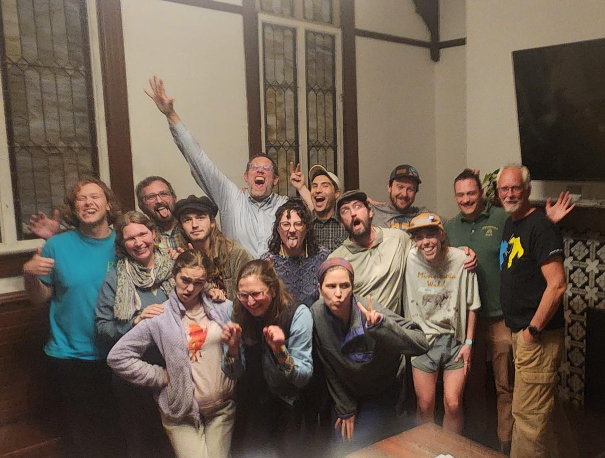
Late in 2026, there’s a Widji (short for Widjiwagan) reunion here in Portland. Of course, I attend. We swap stories about our alma mater of the northwoods. I realize I’m one of the old-timers. I hear myself saying things like “Well, back when I was a camper…” and being asked to verify old myths and rumors. “No, we didn’t burn our wood boats at the end of advanced trips.” or “Yes, we treated our canvas tents with flammable waterproofing.”
I’m gregarious, especially at events where I share some common experience with those people I’m inflicting my gregariousness upon. One set of Widji parents brought along their Widji offspring. (Widji romances weren’t uncommon. We were hormonal and buffed up – see above.) So I’m talking to Sam, the next generation of Widji campers, trying to sound deserving of counselorish respect.
“I’ve built a birch bark canoe,” Sam tells me. This is a feat deserving respect. Sam is pretty damn cool.
“I’ve built a cedar strip canoe,” I respond. Sam nods. He knows what that is. We acknowledge our mutual respect.
“I’d like to work in the Widji canoe barn,” Sam tells me.
The Widji canoe barn is the mecca of wood-and-canvas canoes. They have the pillars necessary to stretch canvas. They fix Old Town canoes on a regular schedule. There is no better place in the world to learn how to build and maintain heritage canoes. Want proof? When Joe Seliga died, he willed the forms and tools he used to build Seliga canoes to the Widji canoe barn. This place is now the epicenter of Seliga boats. You can’t get any cooler than that. And Sam wants to work there.
Perhaps you are seeing the obvious progression of events. Sam wants to be a Seliga canoe master. I have a neglected Seliga canoe. It only make sense…
“Sam,” I say. “Would you like to own a Seliga?”
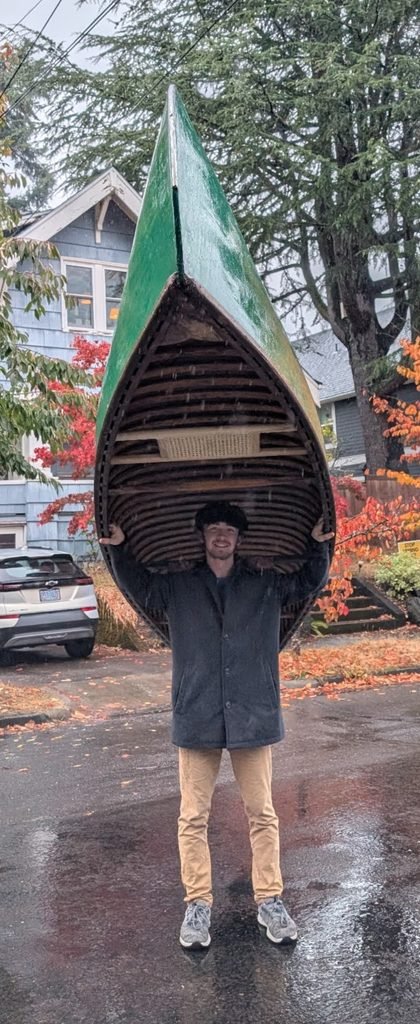
I make this conditional on his getting parental approval. In less than one minute, I am speaking with his parents. They are Widji. They know what a Seliga is. They aren’t sure what I’ve actually said. Sam heard me say something about giving him a Seliga, but that obviously can’t be right, or can’t be the whole story.
I explain the history of the Seliga and assure them that yes, I want to give the canoe to Sam, no strings, no cost. All he needs is permission from them to bring home a boat.
Tuesday of the next week, Sam and parents show up with car-top carriers. We load the boat on his car. We tell stories of our adventures. I wave as they leave. I wave goodbye to the Seliga.
Seliga
Never in my life have I felt a greater sense of pride as I watched Sam and the Seliga drive off. It’s oddly metaphysical, but I think the Seliga planned all of this. I don’t know for sure if Sam will reskin the boat. Maybe he will give it to someone else, who will put it in their will for a grand nephew, who is the archivist at the Smithsonian. Don’t know, don’t care. This Seliga seems capable of taking care of itself.